
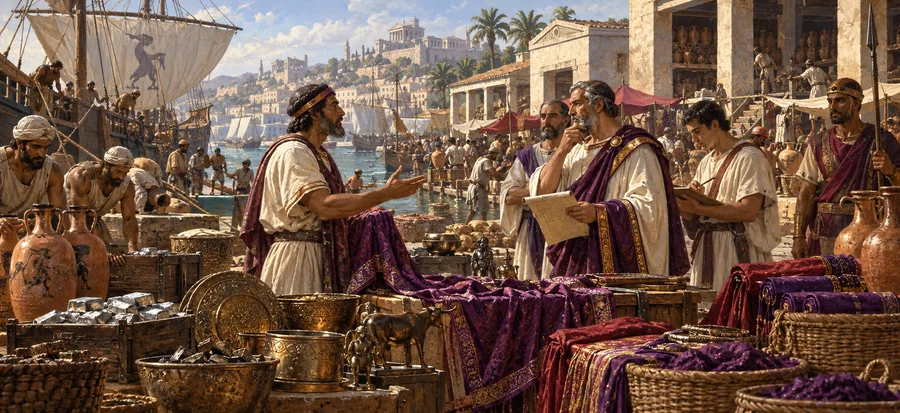
The Merchant Republic
Carthage rules the sea lanes of the western Mediterranean from Carthago, with ten settlements across Africa, Sicily, Sardinia, the Balearics and southern Iberia.
You start with 120,000 in the treasury. Carthago already has a Mercenary Contract Centre with three companies waiting to be hired: Numidian Riders, an Iberian Company and a Greek Company. It also has the Cothon, the republic's war harbour.
Carthage does not recruit land units in the usual way. Until the reform, your armies are mercenary companies, bought six units at a time with silver. The AI Carthage recruits normally.
Your long goal is to take Rome.
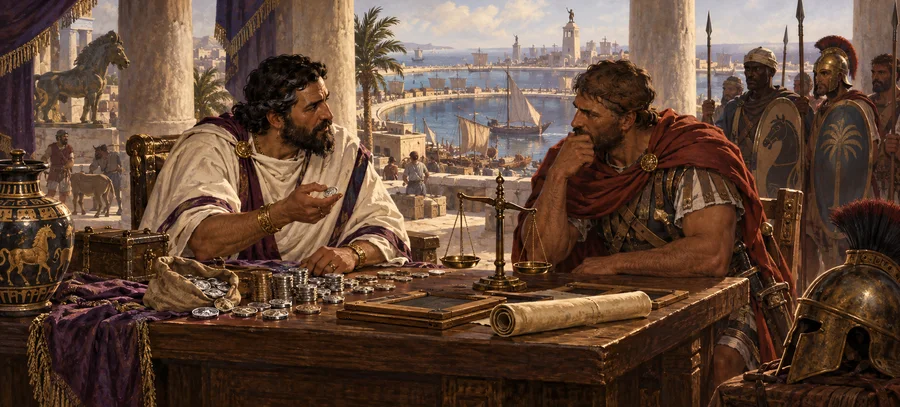
Mercenary Contract Centres
A Mercenary Contract Centre is where you hire your armies. It costs 12,000, takes two turns and can be built in any town or larger. It needs no focus slot and has no upkeep.
- Each centre lists three different companies.
- To hire one, queue it like a building, for example Hire Iberian Company. You pay the contract price and the contract takes one turn.
- At the start of your next turn the six units appear in that town's garrison.
- Every centre also gives -2 law and +10% trade income: soldiers and their followers are good for business.
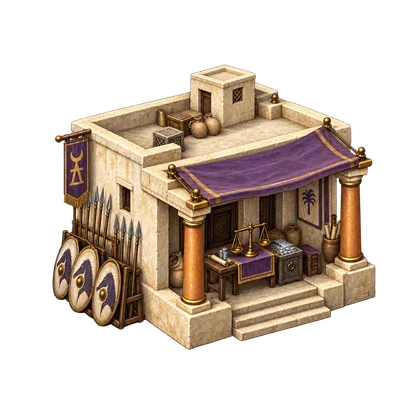 Mercenary Contract Centre12,000 | 2 turns | town or larger | -2 law, +10% trade income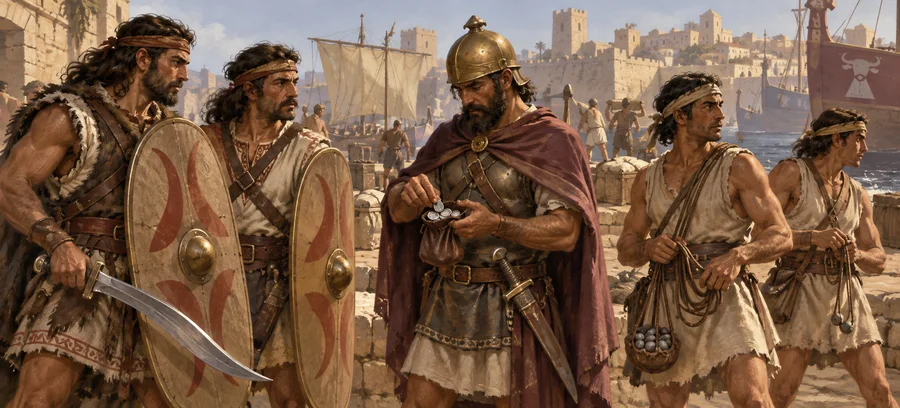
The Companies
Six kinds of company sell their service. A centre favours companies from its own region, but any company can turn up anywhere, and you never need to own its homeland.
| Company | Price | Usual homelands | The six units |
|---|---|---|---|
| Illyrian Company | 16,000 | Illyricum, Dacia and Thracia | 4 Illyrian Mercenaries, Peltasts, Militia Cavalry |
| Italian Company | 18,000 | Italia | 2 Italic Hastati, Samnite Hoplites, Lucanian Infantry, Italic Velites, Italic Equites |
| Gallic Warband | 18,000 | Gallia, Britannia, Germania | 3 Swordsmen, Warband, Skirmisher Warband, Barbarian Cavalry |
| Iberian Company | 19,000 | Iberia | 4 Spanish Mercenaries, Balearic Slingers, Barbarian Cavalry |
| Numidian Riders | 21,000 | Africa, Arabia | 3 Numidian Mercenaries, 2 Desert Infantry, Numidian Javelinmen |
| Greek Company | 22,000 | Graecia, Asia Minor, Aegyptus | 4 Hoplites, Peltasts, Cretan Archers |
Units keep their normal statistics and upkeep. Contract troops cannot be retrained in your towns.
Veterans and specialists
When a company arrives there is a chance that one of its units is replaced by a better one. The company is still six units.
| Company | Possible specialist |
|---|---|
| Italian | Italic Principes or Italic Triarii |
| Illyrian | Bastarnae Mercenaries or Falxmen |
| Gallic | Chosen Swordsmen or British Light Chariots |
| Iberian | Scutarii or Bull Warriors |
| Numidian | Numidian Legionaries or Numidian Camel Riders |
| Greek | Armoured Hoplites or Spartan Hoplites |






Fresh Offers
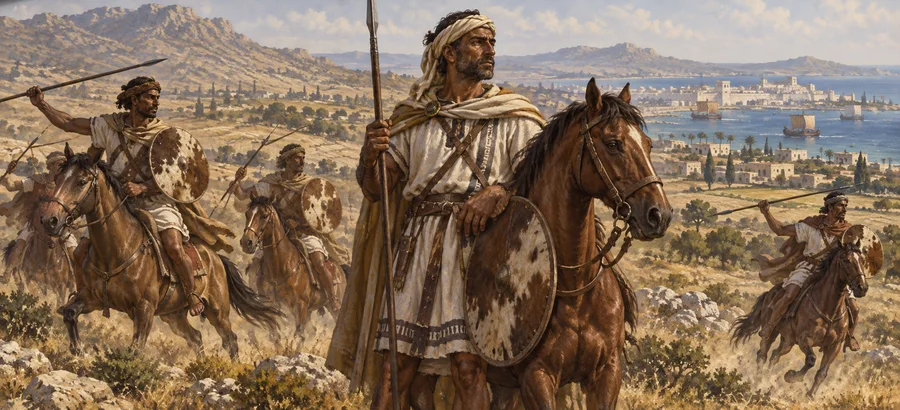
Each company can be hired once. The offers then change on a ten-turn cycle that starts with your campaign:
- Halfway through each cycle, every slot whose company has been delivered, or that stands empty, gets a new offer. A spent slot is refilled within five turns.
- At the end of each cycle, unused offers are replaced as well, but only while the town's building queue is empty and you have money. A busy queue can keep an old offer on the list past its refresh.
- A company you have paid for is never replaced before it arrives.
Delivery has its own rules:
- Each centre delivers at most one company per turn.
- A besieged town keeps its company until the siege is lifted.
- If the town is captured, its paid contracts are lost.
An Army of the Republic
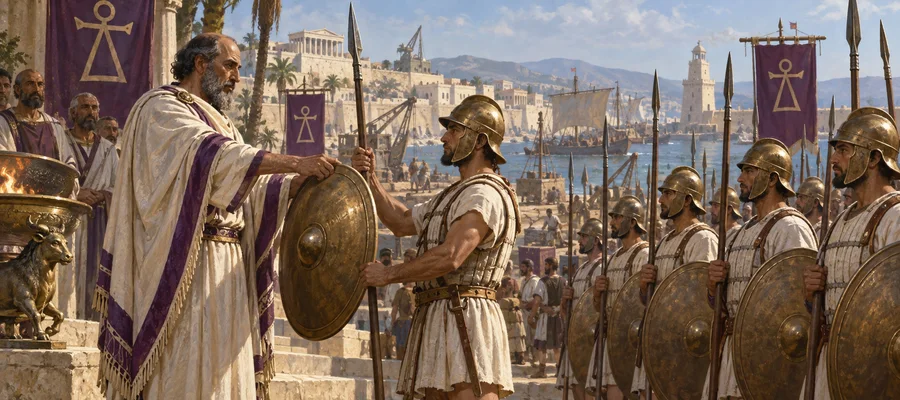
Once you hold 25 settlements, or own Roma, the council proposes a standing army. The reform costs nothing.
- Yes is permanent. Your government buildings recruit Carthaginian units, and the centres stop offering new companies. Companies already paid for still arrive, and the centres keep their law and trade effects.
- No keeps the companies. The council asks again ten turns later.
While the question is open, the merchant houses wait for your answer.
| Government building | From | Adds |
|---|---|---|
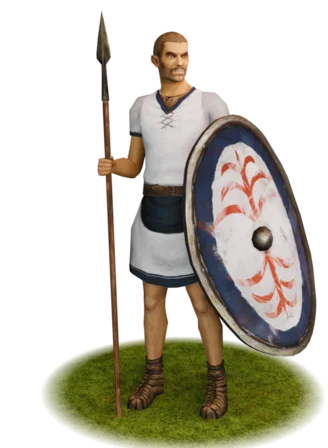
| Governor's House | Village | Town Militia, Skirmishers, Slingers |
| Governor's Villa | Town | Iberian Infantry, Round Shield Cavalry |
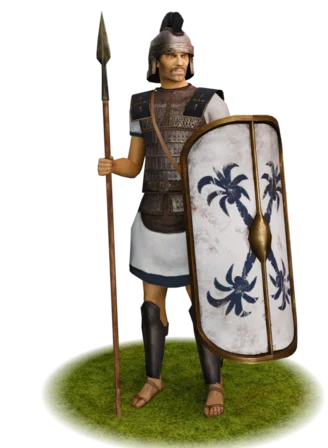
| Governor's Palace | Large town | Libyan Spearmen, Long Shield Cavalry, Elephants |
| Councillors' Chambers | City | Poeni Infantry, Sacred Band Cavalry, Onagers |
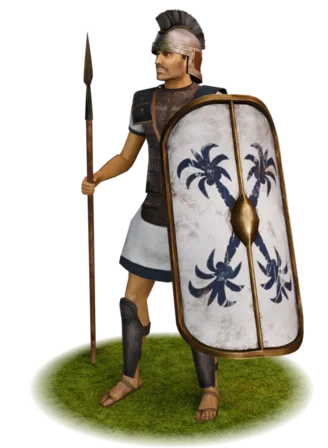
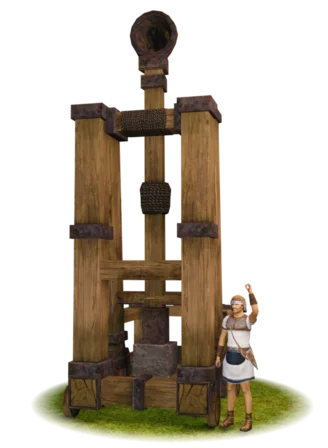
| Royal Palace | Large city | Sacred Band, War Elephants, Heavy Onagers |
Each building keeps the troops of the ones below it.










The Merchant Houses
From about turn 6, and then roughly every eight turns, the great houses put a bargain before the council. Saying no costs nothing.
| Offer | If you accept |
|---|---|
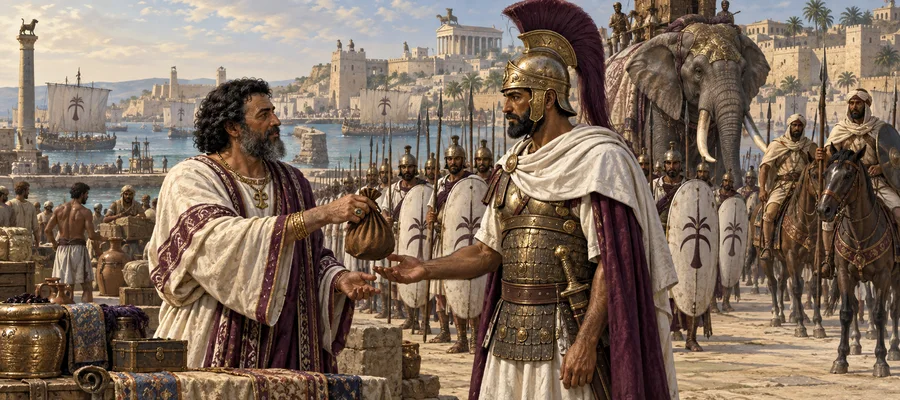
| Finance an Expedition | Eight veteran, well-armed units join a named town with a contract centre: Sacred Band, citizen infantry, elite hoplites, cavalry, missile troops and War Elephants. |
| Expand the Harbour | The houses pay for a harbour upgrade in a named city. |
| Secure the Grain Supply | +20% public order for 8 turns in all your towns of one troubled region. |
| A Festival for the Republic | +10% public order in all your towns for 6 turns. |
| Sponsor Cultural Projects | Carthaginian culture spreads faster in one region for 12 turns. |
Active effects show in each town as Merchant Patronage. An unanswered offer returns next turn.
Every gift you accept makes the houses more powerful, and powerful houses stop asking and start demanding. Turning down gifts you do not need keeps them weaker.
Harbours and the Cothon
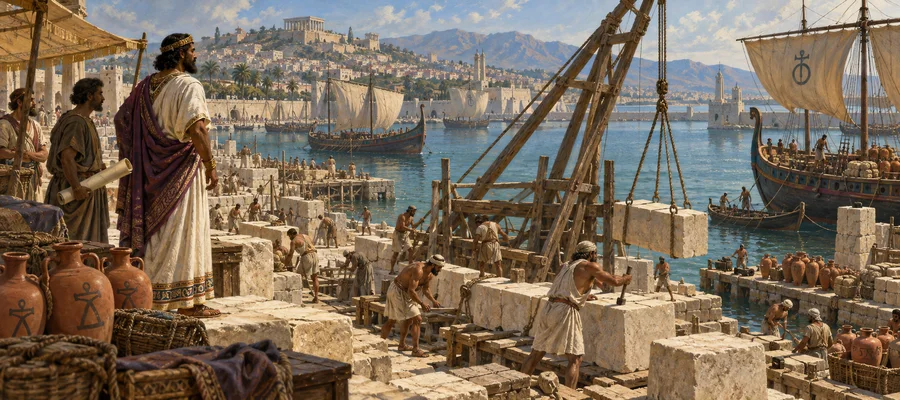
The Cothon of Carthago is the republic's war harbour. It is permanent and free, needs no focus slot and has no upkeep. It gives Carthago what the Naval focus gives elsewhere (for Carthage, Focus: Cothon): +10% trade income and warships by harbour level.
| Harbour | Cost | Warships in Carthago |
|---|---|---|
| Port | 30,000 | Boats, large boats, biremes |
| Shipwright | 45,000 | Adds triremes |
| Dockyard | 65,000 | Adds quinqueremes, corvus quinqueremes and deceres |
Carthago starts with a port. Harbours are expensive for everyone, and this is where the merchants help: Expand the Harbour pays 45,000 for a Shipwright in a city with a port, or 200,000 for a Dockyard in a large city with a Shipwright. The money comes at once; you queue the upgrade yourself. No further merchant offers come until it is finished.
Decrees of the Council
Carthage has the six common edicts and Abandon Settlement, but no edicts of its own. Its tools are silver: the centres, the companies and the bargains of the great houses. See Governing the Realm for edicts, focuses and town statuses.
Three common edicts suit Carthage especially well:
 Market Privileges10,000 | +30% trade income. Pairs well with a contract centre
 Census and Assessment8,000 | +15% tax, +1 law, -5% order. Offsets the centre's lost law
 Tax Relief5,000 | -25% tax, +25% public order
Punic Standards Abroad
Holding a famous city at the end of a round brings a one-time announcement. They change nothing in territory or money; they mark how far the republic has come.
| City | Announcement |
|---|---|
| Syracuse | Syracuse Yields to Carthage |
| Athens | Athens Under Punic Banners |
| Alexandria | The Pharos Under Punic Guard |
| Antioch | Carthage on the Orontes |
| Hierosolyma | Carthage at the Gates of Jerusalem |
| Babylon | Punic Standards Before Ancient Kings |
| Camulodunum | Beyond the Pillars, Beyond the Sea |
| Roma | Rome Beneath Punic Standards |
What the Council Remembers
Your generals remember their lives. They gain traits for the lands they visit, the famous cities they see and take, the peoples they fight and the battles they win or survive. A Carthaginian general carries Served the Council of Carthage.
A Man of the Western Shores (+1 influence) needs Africa, Iberia and Italia visited and both Carthago and Syracuse seen.
Defender of the Council (+1 law) needs a victory over the Mercenary Confederacy and a field battle won while receiving the enemy's attack.
Silver Has a Memory
Every company you hire and every gift you accept is remembered. The houses that fund you keep accounts, and in some campaigns the captains you pay come to collect.
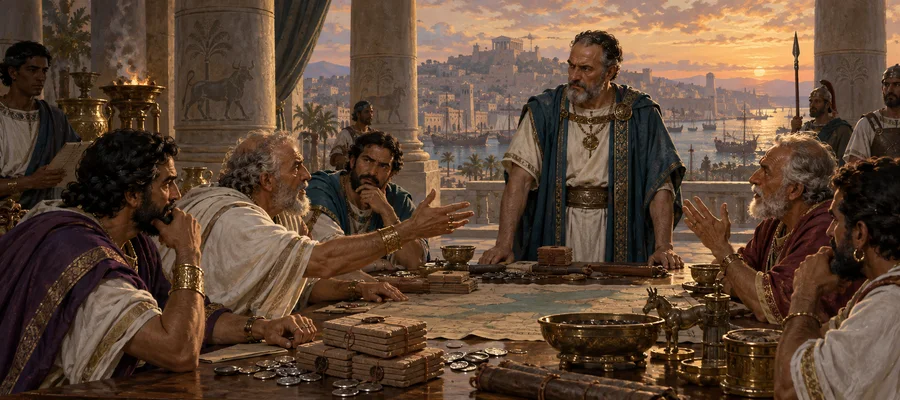
The Houses Demand
Each gift you accept makes the merchant houses stronger. Once they are strong enough, some of their visits become demands:
| Demand | Yes | No |
|---|---|---|
| The Price of Generosity | -20% tax income everywhere for 12 turns | 6 turns of commercial disruption |
| An Inquiry Quietly Buried | No visible cost, but the houses grow stronger | 6 turns of commercial disruption |
| Compensation for Old Privileges | Pay 50,000, even into debt | 6 turns of commercial disruption |
Commercial disruption means -15% public order and -20% trade income in all your towns. A new disruption restarts the clock rather than stacking.
Paying compensation, refusing a demand and declining their gifts all weaken the houses.
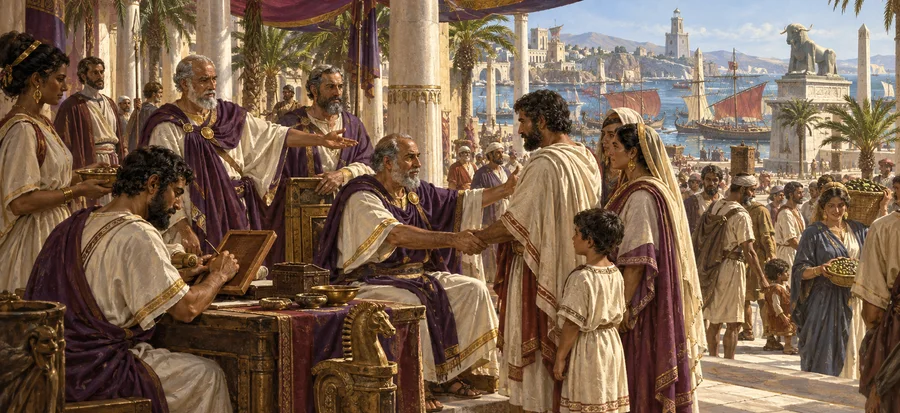
The Council Makes Its Price
Once per campaign, if the houses have become very powerful, from turn 40 and with at least 25 settlements, they make a final demand:
- The Council Makes Its Price. Yes: -20% tax income everywhere for 20 turns, and the council is reconciled. No: a second choice follows.
- Silver or a Reckoning. Yes: pay 80,000, even into debt, to buy out their claims. No: break their hold, at the cost of ten turns of commercial disruption.
Either way the houses lose most of their power. Ordinary bargains continue afterwards.
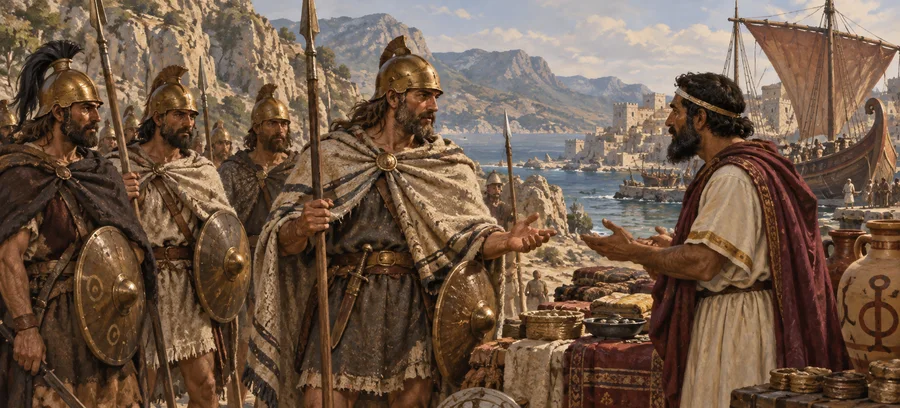
The Captains' Grievance
In some campaigns the captains you hire turn on the republic. Whether yours is one of them is decided when the campaign starts. The dispute can begin from turn 20, once you have hired at least twelve companies and hold at least fifteen settlements.
Every company you hire adds to their resentment. The reform stops new hiring, but it does not end a dispute already under way. Three decisions follow, at least three turns apart:
- The Captains' Petition: recognise their claims, or refuse.
- The Burden of Payment: ease the collections, or maintain them. Maintaining them lets more towns of the region join a later revolt; easing limits it to towns with contract centres.
- An Assembly of Soldiers: guarantee the agreement, or reject it. This answer weighs most.
Each Yes calms the captains but puts a levy on all your settlements until twenty turns after your latest agreement: the Mercenary Settlement Levy (-20% tax), then Heavy (-40%), then Crushing (-60%). Each No inflames them.
If it holds, The Companies Reconciled ends the crisis. If not, the companies go to war.
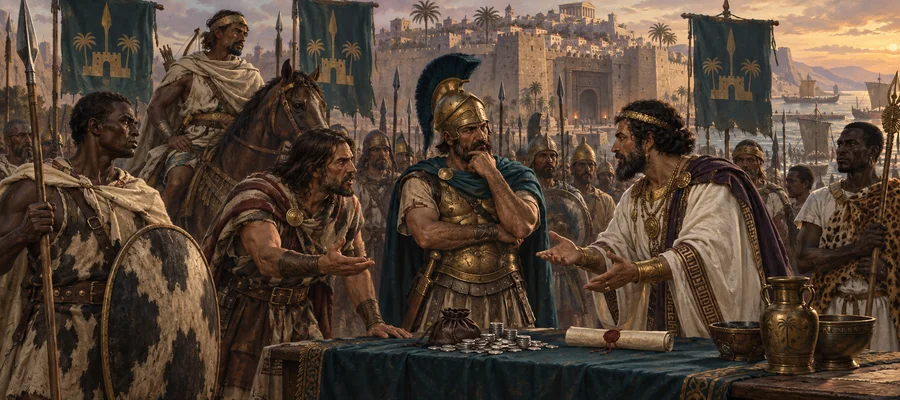
The Mercenary War
The Mercenary Confederacy rises in one of your towns with a contract centre, in Africa if it can. Up to two more towns of the same region join at once, and for eight turns more may defect, one a turn, up to six in all.
- Each town that goes over gets a garrison of twenty experienced mercenaries and loses its edicts.
- Your characters inside it, apart from the faction leader, go over too.
- The Confederacy receives a war chest of 500,000.
- Carthago, your capital, a besieged town and any town holding your faction leader never defect.
Each defection brings a report naming the town; either button only acknowledges it. There is no peace with the Confederacy: the war ends when it is destroyed, with The Mercenary War Ends. A levy still running continues until it expires.

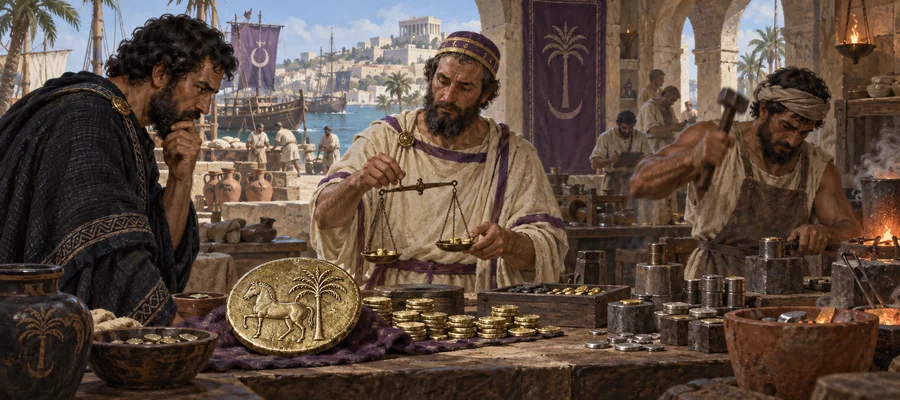
An Emergency Issue
Paid decisions can put you into debt. If the treasury stays below zero for several turns, the moneyers may offer to strike lighter coin: An Emergency Issue, then The Merchants Weigh Our Promise, then The Council's Last Resort.
Each issue refills the treasury to at least 100,000 and adds a penalty in every town: Light, Distrusted, then Discredited Coinage. Fifty turns without another issue clear them all. The rules are in Governing the Realm.

The World in Motion
Carthage uses the standard migration profile. Once you hold 75 settlements and it is at least turn 60, the late-campaign invasions can begin. In some campaigns they can open from turn 90 whatever your size, and from turn 180 they can open regardless.
- The barbarian kingdoms: the Franks rise in northern Gaul and Germania, then the Saxons, Alemanni, Burgundians, Lombards, Vandals and Goths follow. All declare war on you.
- The Huns: a migrating horde from the steppe north of the Black Sea, with fifteen extra armies and a vast war chest.
Which comes first is decided at random. The second waits at least 35 turns after the first arrives. Both rise far from Africa: how hard they hit you depends on how far north your empire reaches.
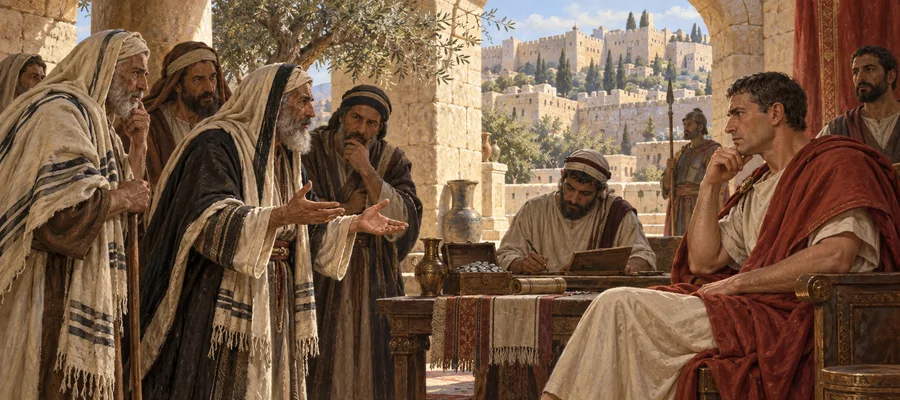
The Judaean Rising
In some campaigns Judaea rises against whoever holds Hierosolyma, from turn 150. If it is yours, three petitions arrive three turns apart, each open for four turns:
- The Elders' Petition: pay 50,000 in restitution.
- The Customs of Jerusalem: a charter that lowers tax, raises order and bars all recruitment there, contract hiring included.
- The Council's Terms: lower tax and law in the city.
Each agreement weakens the eventual rising; accept all three and it never comes. Refuse them all and the city rises as Judaea with a strong garrison, extra armies and a war chest.
7 chapters are sealed. They cover what the merchant houses demand once they grow strong, the troubles that can come from the companies you hire, and the wider dangers of the late campaign.
Field notes
- Hire on turn one. The opening treasury pays for all three companies in Carthago with plenty to spare.
- Keep six free places in a town's garrison before its contract completes. Units that do not fit are lost.
- Build contract centres in different regions: each region favours its own companies, and every centre adds trade income.
- Be choosy with merchant gifts. Each one you accept makes the houses stronger.
- In a short campaign, outlive the Scipii and Spain.