
The Three Families
The Republic sends three great families into the world. Each starts with two large towns in Italy and 40,000 in the treasury. The Senate holds Rome and stays in the hands of the AI.
| Family | Starting towns | Short campaign: outlive |
|---|---|---|
| Julii | Ariminum, Asculum | The Gauls |
| Brutii | Croton, Cannae | Macedon and the Greek Cities |
| Scipii | Capua, Cosentia | Carthage and Numidia |
You do not recruit like the other Romans of the base game. You call citizens to the standards by muster, and every town you add must be held, taxed and kept loyal.
 JuliiAriminum and Asculum. North, towards Gaul.
 BrutiiCroton and Cannae. East, towards Greece.
 ScipiiCapua and Cosentia. South, towards Carthage.
The Dilectus
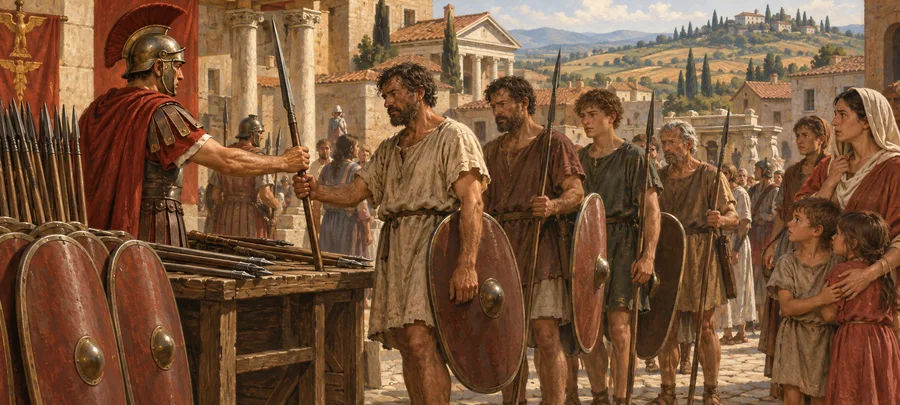
The ordinary recruitment queue offers you only peasants, ships, agents and a few specialists. Your soldiers come from muster orders: you place one in the building list like a building, it takes one turn, and the troops then appear in that town's garrison.
You can muster in your capital and in any town with a Recruitment Centre (Focus: Establish Castra Dilectus, 10,000). The town must be at least a town in size.
- Six core units come from the town that gives the order.
- Up to six more come from your other towns in the same region, one from each. Rested towns are asked first.
- Contributors always send soldiers of their own local culture: a muster raised in Greece brings hoplites and peltasts.
- A muster waits while its town is besieged, and besieged towns do not contribute.
 Dilectus - Infantry Levy15,000 | four line infantry, a skirmisher and a missile unit
 Dilectus - Cavalry Muster20,000 | three cavalry, an infantry, a skirmisher and a missile unit
 Dilectus - Combined Force15,000 | three infantry, a cavalry, a skirmisher and a missile unit
 Dilectus - Skirmishers12,000 | four light and missile units, an infantry and a cavalry
Citizens Under the Standards
The core of a muster depends on who gives the order. A citizen town sends Romans. Any other town sends the strongest local culture: Celtic warbands in Gaul, Nile infantry in Egypt.
The better the town's military focus, the better the Roman core:
| Facility | Cost | Where | Combined Force core (Republic) |
|---|---|---|---|
| Capital or Recruitment Centre | 10,000 | Any town | 2 Hastati, Principes, Equites, Velites, Roman Archers |
| Military Centre | 30,000 | Cities. Your capital: from large town | Hastati, Principes, Triarii, Equites, Velites, Roman Archers |
| Regional Military Headquarters | 60,000 | Large cities. Your capital: from city | 2 Principes, 2 Triarii, Equites, Velites |
At a Headquarters a Cavalry Muster brings four squadrons of Equites, and an Infantry Levy two Principes and two Triarii.
Manpower Shortage
Every muster drains the countryside. The town that gives the order suffers two steps of strain, each contributor one, up to three. It shows as Manpower Shortage:
| Strain | Effect |
|---|---|
| Light | -5% public order, slower growth |
| Medium | -10% public order, slower growth, less farming |
| Heavy | -15% public order, much slower growth, less farming, -10% trade income. No new orders here. |
Strain falls one step every five turns. Towns at heavy strain do not contribute.
Mustered units cannot be retrained. Merge worn units or raise a fresh muster.
The Last Levy
When your family is close to ruin, the homeland can still be called out. While you hold 7 or fewer settlements, any of your towns can build Call the Last Levy: free, one turn.
On your next turn, every town you own in your capital's region raises twelve units, even without a recruitment centre:
| Era | Units in each town |
|---|---|
| Republic | 4 Town Watch, 4 Hastati, 2 Velites, 2 Equites |
| After the Marian reforms | 4 Town Watch, 4 Early Legionary Cohorts, 2 Light Auxilia, 2 Cavalry Auxilia |
| After the Imperial reforms | 4 Town Watch, 4 Legionary Cohorts, 2 Light Auxilia, 2 Cavalry Auxilia |
Each of those towns then suffers Exhausted Households for 30 turns, and the levy cannot be called again until it ends. The twenty-unit garrison limit still applies.
 Call the Last LevyFree | 7 or fewer settlements
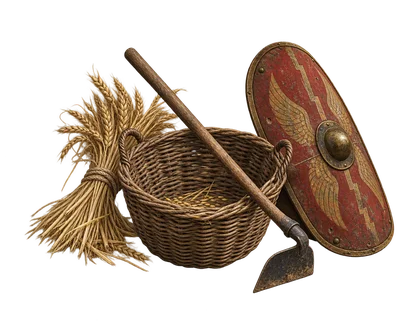 Exhausted Households30 turns | -20% tax, -10% public order, slower growth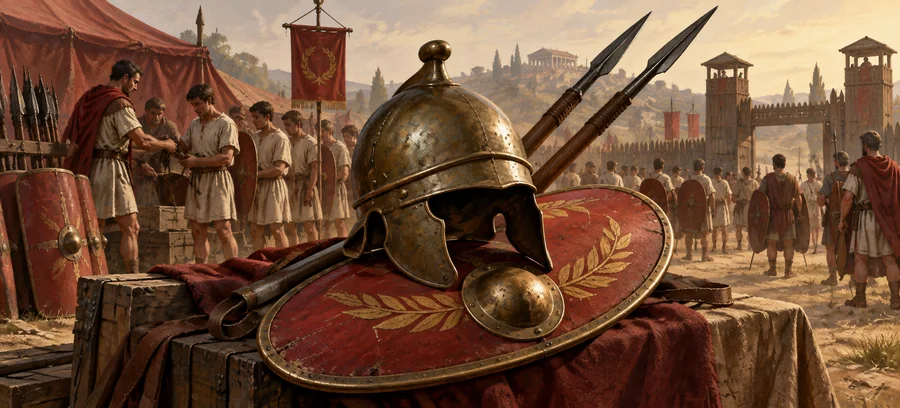
A New Man: the Marian Reforms
The legions change twice during a campaign, and your musters change with them.
- The Marian reforms arrive once any Roman faction makes a city in Italy, other than Rome, into a huge city. The manipular line gives way to cohorts.
- The Imperial reforms follow at least thirty turns later, at a moment no one can predict.
| Era | Combined Force core at a Recruitment Centre |
|---|---|
| Republic | 2 Hastati, Principes, Equites, Velites, Roman Archers |
| Marian | 2 Early Legionary Cohorts, Auxilia, Roman Cavalry, Light Auxilia, Archer Auxilia |
| Imperial | 2 Legionary Cohorts, Auxilia, Roman Cavalry, Light Auxilia, Archer Auxilia |
After the reforms a Military Centre sends Legionary Cavalry instead of Roman Cavalry, and a Headquarters adds a First Cohort to every muster except the cavalry.
Rome and Her Dependants
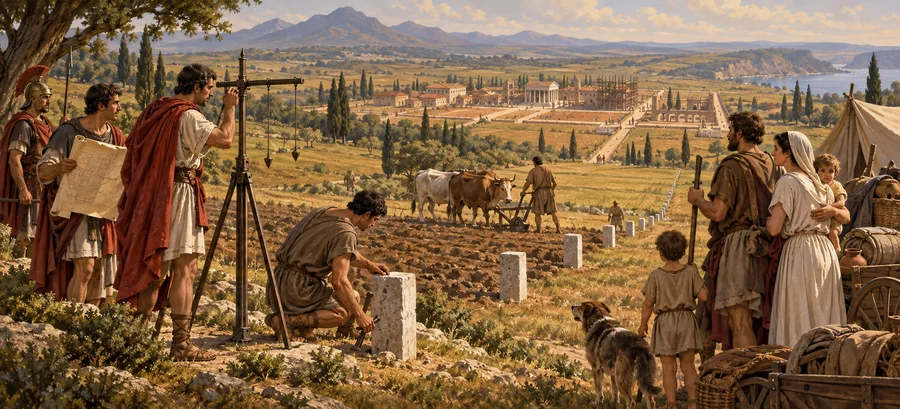
Rome rules through status. Conquests start as Subjects, can be raised to Allies, and the best become Citizens (see Governing the Realm). For Rome the choice matters twice: citizen towns muster Roman soldiers, and the balance of subjects, allies and citizens in your realm is politics.
Besides the six common edicts and Abandon Settlement, Rome has its own decrees:
A fourth Roman decree, Veteran Privileges (15,000, cities), belongs to the Roman Empire only: +2 experience for units recruited normally in the town, slower growth, -20% tax. Mustered troops do not benefit.
 Extort12,000 | +75% tax, -20% public order. Subject and allied towns only; ends at citizenship
 Bread and Games12,000 | +20% public order, -30% tax. Large towns and larger
 Latin Colonies15,000 | Latin culture spreads fast, faster growth, -10% public order, -20% tax. Large towns and larger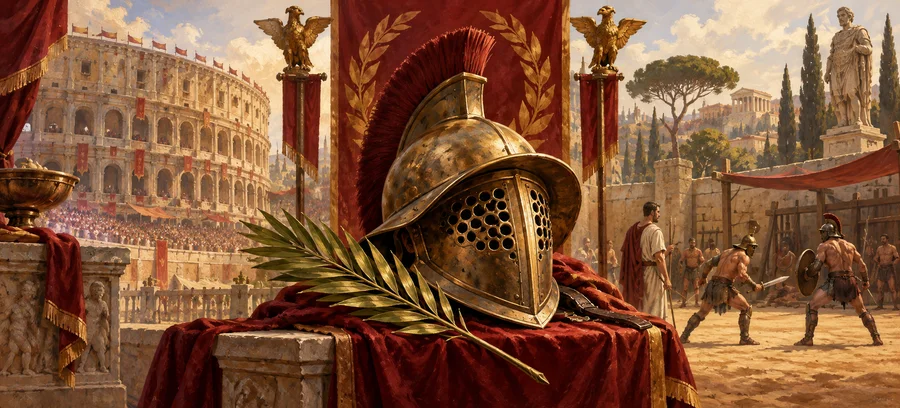
Patrons and Public Works
Rich Romans like to be remembered. From time to time a patron pays for a great institution in one of your cities. You cannot build these yourself and you cannot demolish them; they survive conquest. Each region holds at most one of each kind.
Roman towns also gain public works on their own now and then: sewers in large towns, an aqueduct in large cities.
Arenas are not only a gift: in some campaigns they carry a risk of their own. Spoiler mode explains it.
 Patron-Funded ArenaCities. Games, public order and gladiators; grows into a Civic and then a Great Imperial Amphitheatre
 Siege Engineers WorkshopCities with a Military Centre. Ballistae, later scorpions, onagers in large cities
 Frontier Scout SchoolLarge cities with a Headquarters, after the Marian reforms. Arcani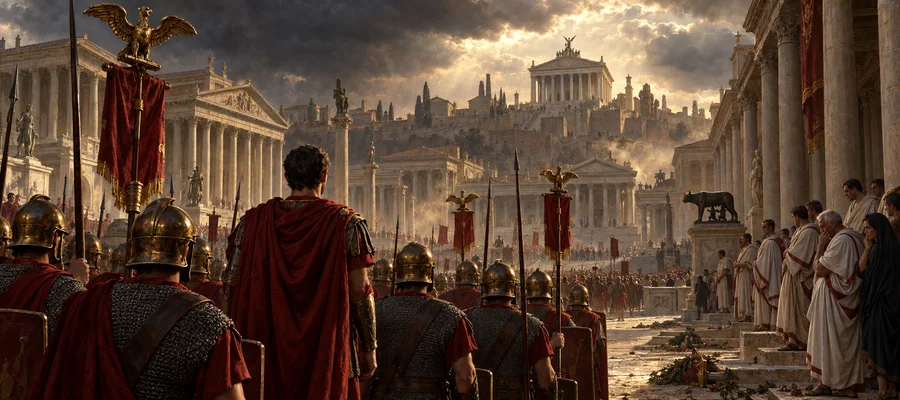
The Road to Rome
Your long campaign is won when you hold Rome and 100 regions. Rome starts in the hands of the Senate; sooner or later you must take it.
One-time announcements mark the great conquests of any Roman house, yours or the AI's: Athens Beneath the Eagles, Carthage Has Fallen, Rome at the Gates of the Temple (Hierosolyma), Beyond the Ocean (Camulodunum), The Jewel of Egypt (Alexandria), The Gate of Syria (Antioch), In the Shadow of Ancient Kings (Babylon), Sicily's Great City (Syracuse) and Rome Taken.
Hold every town of one of the eighteen regions and you also earn its milestone, such as Italia United, Britannia Secured or Rome Commands Greece. Towns held by the other families do not count.
Storm Clouds over the Republic
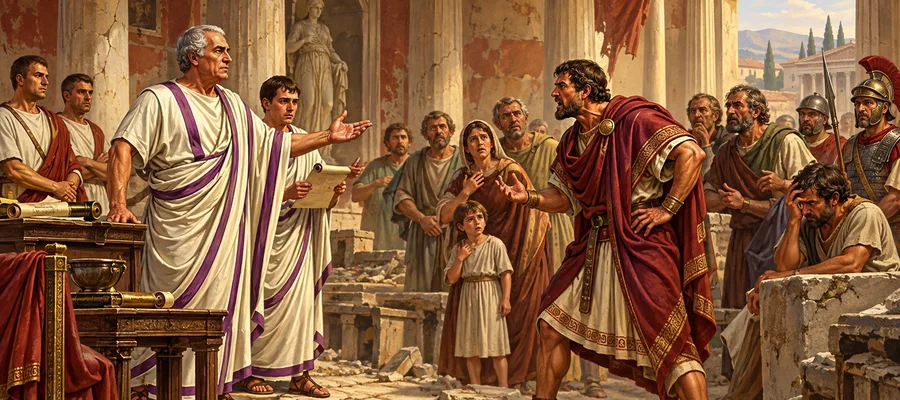
Rome's greatest danger is Rome. The allies who fight beside you want a share in the Republic, the families are rivals as much as partners, and the frontiers will not stay quiet forever.
When petitions, warnings and demands arrive, read them carefully: your answers decide how much of Italy you will have to win twice.
Bellum Sociale
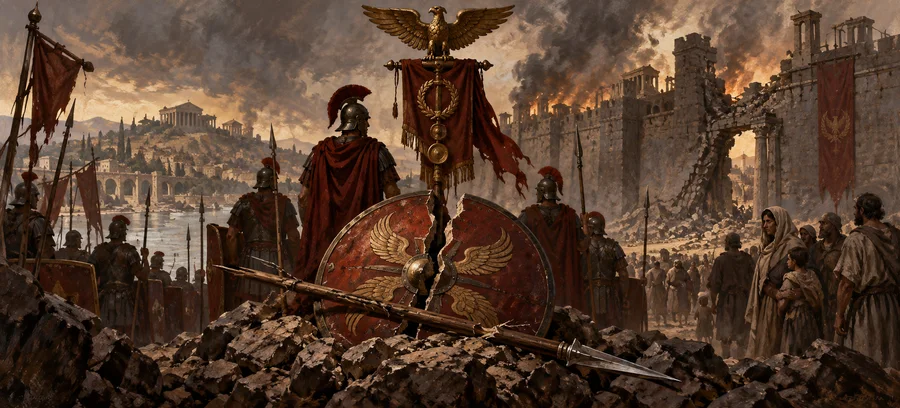
If resentment boils over, your long-held allied and subject towns rise, wherever they are. Rome and citizen towns stay loyal. The rebels found Res Publica Sociorum, each town with a garrison of ten Italic units, at war with every Roman family and the Senate.
As the war breaks out, each of your citizen towns receives three loyal units: Hastati and Velites, or cohorts and Light Auxilia after the reforms. They are lost if the garrison is full.
While the allies stand, the families quarrel. Tensions Among the Families comes in the third turn of the war, Civil War Looms in the seventh. Agreeing calms the families and makes a civil war less likely; refusing raises the risk, and refusing the second brings the families to the brink. From the tenth turn the civil war can break out on any turn: Julii, Brutii, Scipii and the Senate all at war with one another.
The Republic Is Dead
You become the Roman Empire when you own Rome and the other two families and the Senate are destroyed. Res Publica Sociorum does not count, and neither war is needed: conquering your rivals works too.
Rome briefly revolts, the Empire is proclaimed, and on your next turn every town, army, character and your treasury, debt included, pass to it. If a foreign power takes Rome in between, the handover waits.
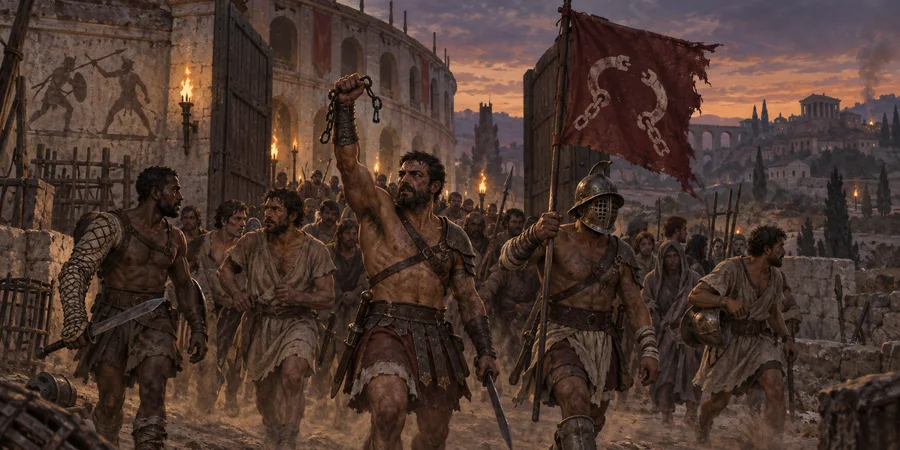
The Empire recruits through the normal queue. Muster orders end; a completed but undelivered order is refunded once.
| Settlement | Recruits |
|---|---|
| Any | Auxilia, Light Auxilia, Roman Archers |
| Town | Archer Auxilia, Legionary Cohorts, Cavalry Auxilia; Wardogs with a Recruitment Centre |
| Large town | Roman Cavalry |
| Military Centre | First Cohorts, regional auxiliaries; Legionary Cavalry from city size |
| Headquarters | Praetorian Cohorts; Urban Cohorts and Praetorian Cavalry from large city |
Regional auxiliaries need a strong local culture and arrive with experience: Cretan Archers among Greeks, Barbarian Noble Cavalry in Gaul, Cataphracts in Armenia, Numidian horse in Africa.











The Gladiator Rising
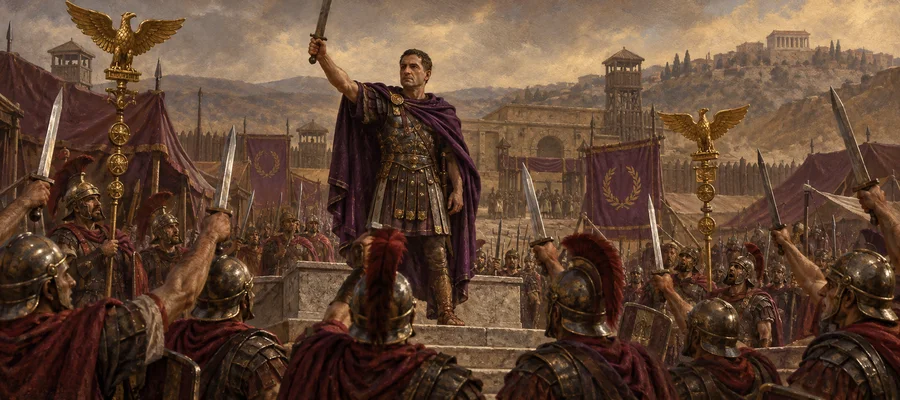
In some Roman campaigns, decided at the start, the gladiatorial schools are a slow fuse. Every arena city you hold breeds resentment; the more arenas, the faster. Four decisions come one at a time:
| Decision | Yes |
|---|---|
| Blood Beneath the Sand | Pay 10,000 for better conditions. Refusing deepens grievances. |
| The Price of Freedom | Pay 20,000 to honour the champions' freedom. Fewer trained gladiators if they rise. |
| A Patron Above the Law | Seize 15,000 from a corrupt patron. It brings the rising closer. |
| Keys to the Armouries | Pay 25,000 to guard the armouries. No delay, but a weaker rising. |
Every Yes is paid at once, even into debt. The first two buy time; the last one makes any revolt smaller and worse armed.
If the schools rise, an arena city becomes the Servile Rebels, with a twenty-unit army beside it. Other arena cities may follow in later turns, each with its own army; citizenship is no protection. The war is permanent, even after you become the Empire. It ends with The Broken Chain when the rebels hold no town and no army.
The Imperial Pretender
A great empire breeds ambitious generals. In some campaigns, once you are the Empire, from turn 40 and with 40 settlements, the legions of one frontier grow restless: Gaul, Germania, Hispania, Africa or Anatolia.
Three demands come, three turns apart, each naming the region: The Soldiers' Donative, The Provincial Purse and A Command Grown Too Powerful. Agreeing costs nothing now but deepens the Army Donative Levy in every town (-20%, -40%, then -60% tax) for twenty turns after the latest agreement. Refusing makes the commander bolder.
After the third answer he either renews his oath (The Purple Refused) or is proclaimed (The Legions' Emperor). Agreements make rebellion less likely; nothing rules it out.
The Imperial Pretenders take up to four cities on that front, never Rome or your leader's city. Every character of yours inside a defecting city, your heir included, goes over with it. Each city receives ten Legionary Cohorts and ten auxiliaries, and the pretender a large war chest. Destroy him for One Emperor Remains.
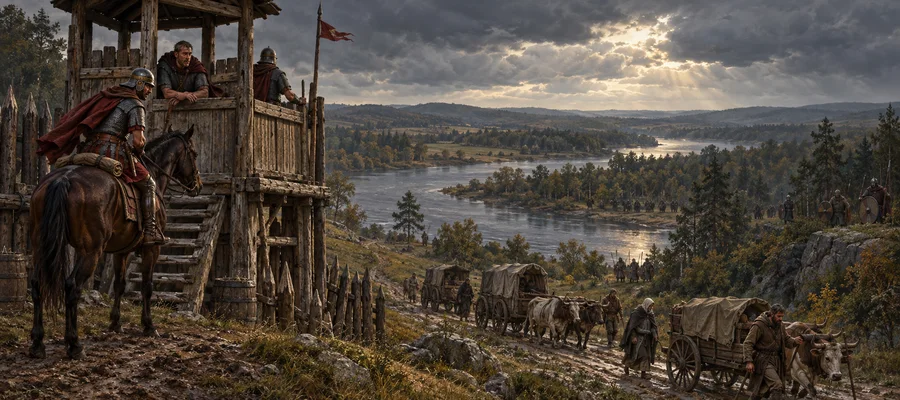
The Peoples in Motion
Two great crises wait beyond the frontier: the barbarian kingdoms and the Huns. Which comes first is decided when the campaign starts. The first can come from turn 60 once you hold 75 settlements; in some campaigns it comes at turn 90 whatever your size, and by turn 180 it comes regardless. The second follows at least 35 turns after the first arrives.
The Franks rise first. Their chiefs offer three bargains, each open for three turns; ignoring one is a refusal, and every payment is taken even into debt:
- The Price of Friendship (50,000): the rising comes later and weaker.
- Keep the Roads Open (80,000): one of your towns does not join them.
- A Confederation Divided (100,000): their last reserve army never comes.
The larger your realm, the more towns, armies and gold they gain. In the turns after them the Saxons, Alemanni, Burgundii, Lombardi, Vandals and Goths rise along the Rhine and Danube, all at war with you.
The Huns announce themselves with rumours and Horsemen on the Horizon, then appear as a migrating horde beside Tanais with two million in gold and a stream of twenty-unit armies for twelve turns. Peace with them stops the flow. Thirty turns after they arrive, the sealed lands at the edges of the map open.
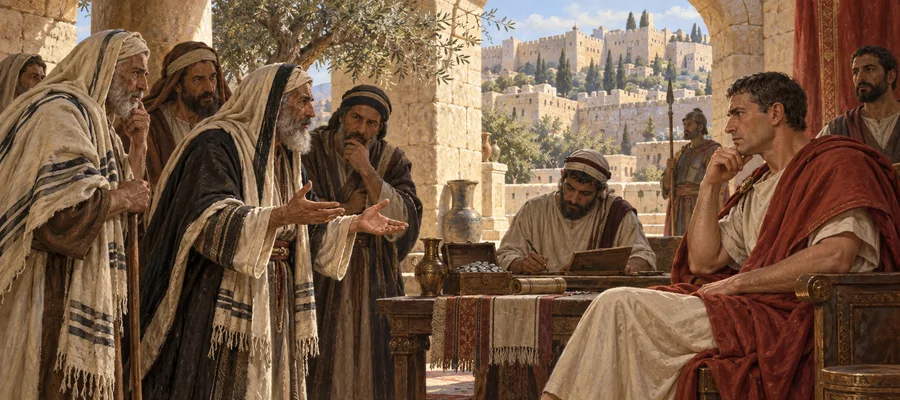
Jerusalem
In some campaigns, from turn 150, Jerusalem (Hierosolyma) stirs. If you hold the city, three petitions come three turns apart. Each stays open four turns; ignoring one counts as a refusal.
- The Elders' Petition: pay 50,000 in restitution.
- The Customs of Jerusalem: grant a charter: -50% tax, +25% public order, and the city no longer raises troops or contributes to musters.
- The Council's Terms: grant privileges: -25% tax, -10% law.
Each agreement makes the rising smaller; all three settle it peacefully. Otherwise Judaea rises with a garrison, armies and gold. Its fall is permanent.

The Deeds of Your House
Your family members remember their lives. They gain traits for the regions they visit (ending a turn in a town), the famous cities they see and take, the peoples they fight and the battles they win or survive. Battles against ordinary rebels do not count.
A few distinctions carry a bonus:
- Man of the Wider World, Far Traveller, Traveller of Many Lands: +1 influence for three, six and ten regions visited.
- Seasoned Campaigner: +1 command, for three regions, three enemy peoples and a victory.
- Tempered by Defeat: +1 command, for winning after surviving a defeat.
- Conqueror of Renowned Cities: +1 command in siege assaults, for taking three famous cities.
- From Iberia to Syria: +1 influence, for seeing Iberia, Italy, Greece and Syria.
A character gains at most +2 command and +2 influence from his history.
Restorer of Order (+1 law) needs victories against two of the allies, the gladiators and the pretender. Shield of the Empire (+1 command in defence) needs victories against a northern people and the Huns. Men who served a family and then the Empire become Witnesses to an Age.
7 chapters are sealed. They cover the political crises of the Republic, what Rome can become, and the storms that gather beyond its borders.
Field notes
- Grow your capital first: it raises a Military Centre as a large town and a Headquarters as a city.
- Keep at least twelve garrison slots free where a muster will complete. Units that do not fit are lost.
- Spread musters across several towns in different regions so no town is worn out.
- Muster from citizen towns when you want Roman soldiers, from provincial towns when you want local troops.
- Use Extort on rich, quiet subjects and remove it before trouble starts.
- Keep the Last Levy for a real emergency: its price lasts thirty turns.
The Allies Demand Rights
Allied and subject towns you hold for a long time build resentment among the allies; allies faster than subjects. Each citizen town eases it. There is no meter: three decisions are your warning, one at a time and in this order. None of them costs money.
An unanswered decision returns the next turn.
The Lex Julia takes effect at the start of your next turn. Every subject and allied town you have held continuously for twenty turns becomes a citizen town, once. Losing a town resets its clock. Each new citizen town pays the citizen upkeep of 400, and your old citizens may resent the newcomers.